
Introduction
The food industry is experiencing a remarkable transformation, and one of the most fascinating developments is the rise of soup technology. As consumer demands evolve and food manufacturers seek more efficient production methods, advanced technologies are reshaping how soups are developed, processed, packaged, and delivered to customers. In 2026, soup technology is no longer limited to traditional cooking methods. Instead, it incorporates artificial intelligence, automation, smart manufacturing systems, sustainable packaging, and advanced food preservation techniques.
The global soup market continues to expand as consumers increasingly seek convenient, nutritious, and ready-to-eat meal options. To meet these expectations, food companies are investing heavily in innovative technologies that improve quality, consistency, safety, and sustainability. From robotic production lines to data-driven recipe optimization, soup technology is revolutionizing every stage of the manufacturing process.
This article explores the latest developments in soup technology, its impact on food production, and how these innovations are shaping the future of the food industry in 2026.
Understanding Soup Technology and Its Evolution
Soup technology refers to the collection of advanced processes, equipment, software systems, and scientific methods used to create, preserve, package, and distribute soups efficiently. While soup production has existed for centuries, modern technological advancements have transformed what was once a labor-intensive process into a highly sophisticated operation.
Historically, soup manufacturing relied heavily on manual labor and basic cooking equipment. Consistency often varied from batch to batch, and shelf life was limited. Today, modern food manufacturers use automated cooking systems, precision temperature controls, and intelligent monitoring systems that ensure every product meets strict quality standards.
The evolution of soup technology has also enabled manufacturers to produce a wider variety of soups tailored to different dietary preferences. Whether consumers seek vegan, gluten-free, high-protein, or organic options, modern production technologies allow companies to create customized products while maintaining efficiency and profitability.
As food technology continues to advance, soup manufacturers are adopting innovative solutions that increase productivity while enhancing consumer satisfaction.
The Role of Automation in Modern Soup Production
Automation has become one of the most significant drivers of innovation within soup technology. Automated production systems help manufacturers streamline operations while maintaining high levels of consistency and food safety.
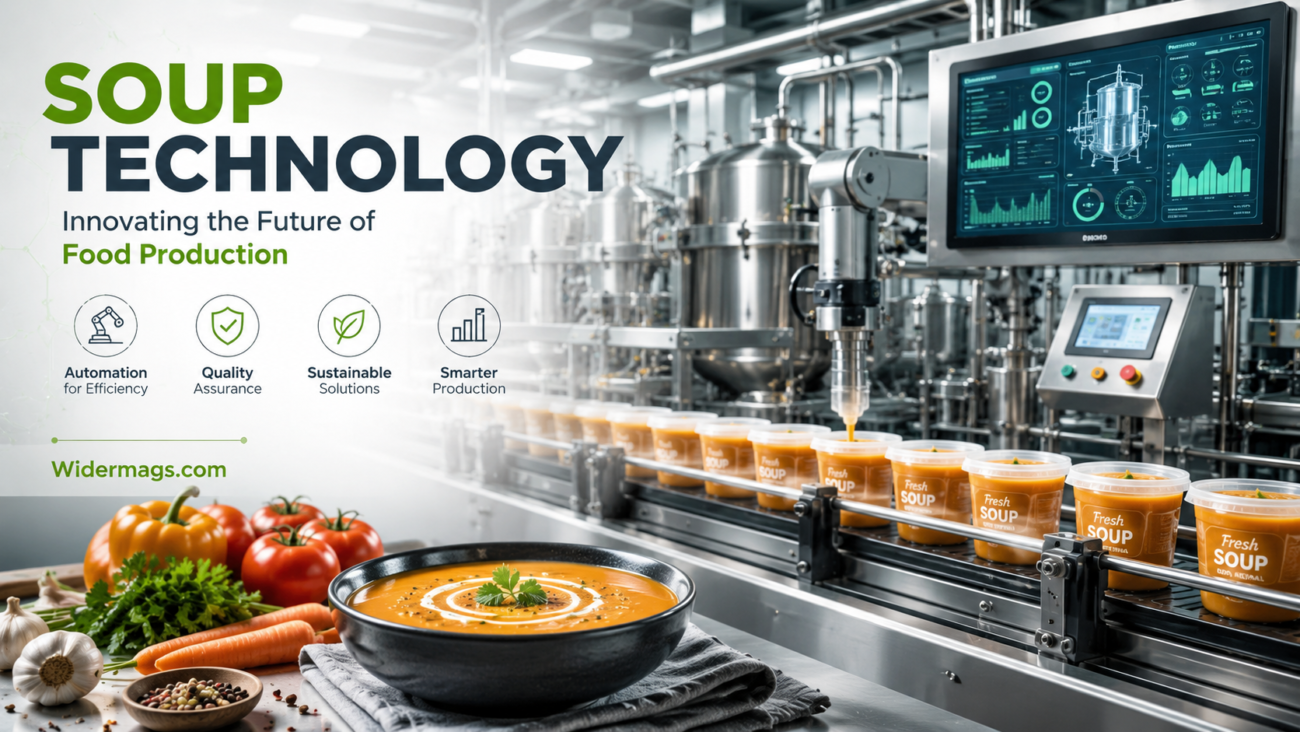
Modern soup factories utilize robotic systems for ingredient handling, mixing, cooking, filling, and packaging. These machines can operate continuously with minimal human intervention, reducing production costs and increasing output. Automated systems also minimize the risk of contamination, a critical factor in food manufacturing.
Advanced sensors monitor every stage of production in real time. Temperature, pressure, ingredient ratios, and cooking durations are carefully controlled through computerized systems. If any parameter falls outside acceptable limits, automated alerts notify operators immediately.
The implementation of automation not only improves efficiency but also enables food companies to respond quickly to changing market demands. Manufacturers can rapidly adjust production schedules, introduce new recipes, and scale operations without significant disruptions.
As labor shortages continue to challenge the food industry, automation is expected to play an even larger role in soup technology throughout the coming years.
Artificial Intelligence and Data Analytics in Soup Technology
Artificial intelligence (AI) is becoming a transformative force in the food manufacturing sector. Within soup technology, AI helps companies improve decision-making, optimize production processes, and develop products that better meet consumer preferences.
Machine learning algorithms analyze vast amounts of production data to identify patterns and predict outcomes. For example, AI systems can determine the optimal cooking time for specific ingredients, reducing waste and improving product quality. These technologies can also forecast consumer demand, helping manufacturers manage inventory more effectively.
Recipe development is another area where AI is making a significant impact. Food scientists can use predictive analytics to evaluate ingredient combinations and flavor profiles before conducting physical trials. This accelerates product innovation while reducing research and development costs.
AI-powered quality control systems use computer vision technology to inspect ingredients and finished products. These systems can detect imperfections that may be difficult for human inspectors to identify, ensuring that consumers receive consistently high-quality soups.
As artificial intelligence becomes more sophisticated, its integration within soup technology will continue to drive innovation and efficiency across the food industry.
Advanced Food Processing Techniques Improving Soup Quality
Modern soup technology relies heavily on advanced food processing methods that preserve nutritional value while extending shelf life. Traditional preservation techniques often affected flavor and texture, but new technologies offer superior results.
High-pressure processing (HPP) has become increasingly popular among soup manufacturers. This method uses intense pressure to eliminate harmful microorganisms without exposing food to high temperatures. As a result, soups retain more of their original flavor, color, and nutritional content.
Another important innovation is aseptic processing. In this method, soup and packaging materials are sterilized separately before being combined in a sterile environment. This significantly extends shelf life without requiring artificial preservatives.
Ultra-high-temperature processing is also widely used in modern soup production. By rapidly heating and cooling products, manufacturers can eliminate pathogens while preserving desirable sensory qualities.
These advanced processing technologies allow manufacturers to offer healthier products with fewer additives, meeting the growing consumer demand for clean-label foods.
Sustainable Packaging Innovations in Soup Technology
Sustainability has become a major focus within the food industry, and soup technology is evolving to address environmental concerns. Packaging innovations are helping manufacturers reduce waste, lower carbon emissions, and improve recyclability.
Many companies are replacing traditional plastic containers with biodegradable or recyclable alternatives. Plant-based packaging materials are gaining popularity due to their reduced environmental impact. These materials decompose more quickly than conventional plastics while maintaining product protection.
Smart packaging technologies are also emerging within the soup industry. These packaging solutions incorporate sensors that monitor freshness and storage conditions. Consumers can receive accurate information about product quality, reducing food waste and improving safety.
Lightweight packaging designs further contribute to sustainability by reducing transportation costs and fuel consumption. Additionally, manufacturers are implementing packaging systems that require fewer raw materials without compromising durability.
As environmental awareness continues to grow, sustainable packaging will remain a critical component of future soup technology developments.
Enhancing Food Safety Through Smart Monitoring Systems
Food safety is a top priority for soup manufacturers, and technological advancements are helping companies achieve higher standards than ever before. Smart monitoring systems provide continuous oversight throughout the production process.
Internet of Things (IoT) devices collect data from production equipment, storage facilities, and transportation systems. These connected technologies allow manufacturers to track conditions in real time and identify potential issues before they become serious problems.
Temperature monitoring systems ensure soups remain within safe ranges during cooking, storage, and distribution. Automated record-keeping simplifies regulatory compliance and provides valuable documentation for quality assurance purposes.
Blockchain technology is also gaining traction within soup technology. This system creates transparent supply chains by recording every transaction and movement of ingredients. If a safety concern arises, manufacturers can quickly trace products back to their source.
These innovations help protect consumers while strengthening trust between food companies and their customers.
The Growing Demand for Personalized Soup Products
Consumer preferences are becoming increasingly diverse, and soup technology is helping manufacturers deliver more personalized products. Advanced production systems allow companies to create specialized recipes for specific dietary requirements and health goals.
Many consumers now seek soups that align with lifestyles such as veganism, keto, paleo, or gluten-free eating. Modern manufacturing technologies make it possible to produce these specialized products efficiently without compromising quality.
Nutritional customization is another emerging trend. Some companies are exploring technologies that enable personalized meal solutions based on individual health data. In the future, consumers may be able to order soups tailored to their nutritional needs and taste preferences.
Digital platforms and consumer analytics provide valuable insights into purchasing behavior. Manufacturers use this information to develop products that better meet market demand while identifying opportunities for innovation.
Personalization is expected to become a defining characteristic of soup technology in the years ahead.
Robotics and Smart Manufacturing in Soup Factories
The concept of smart manufacturing is rapidly gaining momentum within the food industry. Soup factories are increasingly adopting robotics and intelligent systems that enhance efficiency and operational flexibility.
Collaborative robots, often called cobots, work alongside human employees to perform repetitive tasks. These robots handle ingredient preparation, packaging, palletizing, and other labor-intensive activities. By automating routine processes, companies can improve productivity while allowing workers to focus on higher-value responsibilities.
Smart manufacturing facilities integrate data from multiple systems into centralized platforms. Managers gain real-time visibility into production performance, equipment health, and resource utilization. This information supports faster decision-making and continuous process improvement.
Predictive maintenance technologies further enhance operational efficiency. Sensors detect signs of equipment wear before failures occur, reducing downtime and maintenance costs.
As Industry 4.0 principles continue to influence food production, robotics and smart manufacturing will play a crucial role in the future of soup technology.
Challenges Facing the Future of Soup Technology
Despite its many advantages, soup technology faces several challenges that manufacturers must address. One of the most significant concerns is the high cost of implementing advanced technologies. Smaller companies may struggle to invest in automation, artificial intelligence, and smart manufacturing systems.
Cybersecurity is another growing issue. As production facilities become increasingly connected, protecting sensitive data and operational systems becomes more important. Manufacturers must invest in robust security measures to prevent disruptions and safeguard consumer information.
Regulatory compliance also presents challenges. Food safety standards continue to evolve, requiring companies to adapt their processes and technologies accordingly. Staying compliant while maintaining efficiency can be complex and resource-intensive.
Additionally, balancing innovation with consumer expectations remains critical. While advanced technologies offer numerous benefits, manufacturers must ensure that products continue to deliver the taste, quality, and authenticity consumers expect.
Addressing these challenges will be essential for the continued growth and success of soup technology.
Conclusion
Soup technology is transforming the food industry in remarkable ways. Through automation, artificial intelligence, advanced processing methods, sustainable packaging, and smart manufacturing systems, companies are producing higher-quality soups more efficiently than ever before. These innovations are helping manufacturers meet growing consumer demands for convenience, nutrition, safety, and sustainability.
As technology continues to evolve throughout 2026 and beyond, the soup industry is poised for even greater advancements. Personalized nutrition, intelligent production systems, and environmentally friendly solutions will shape the next generation of soup manufacturing. Businesses that embrace these innovations will be better positioned to compete in an increasingly dynamic marketplace.
The future of soup technology is not simply about producing food more efficiently. It is about creating smarter, safer, healthier, and more sustainable products that enhance the consumer experience while supporting the long-term growth of the global food industry.
Widermags.com
