
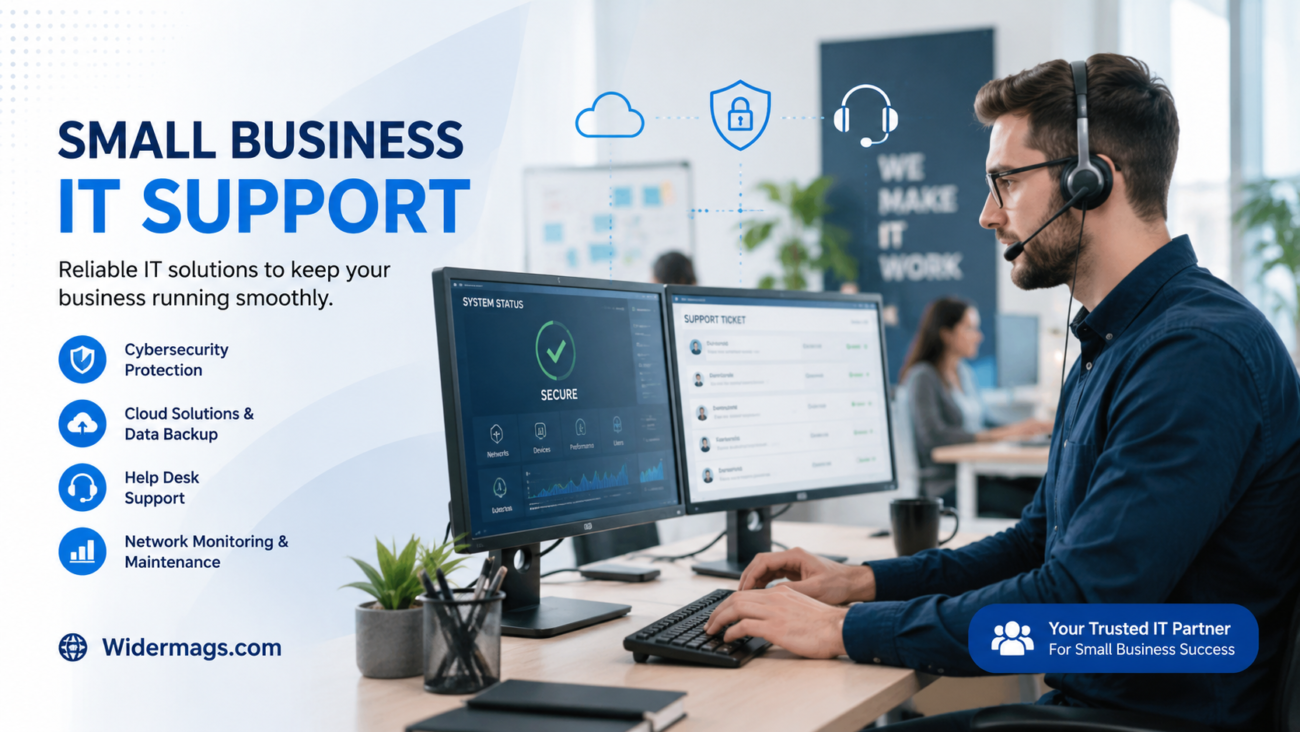
In today’s digital-first business environment, technology is no longer a luxury reserved for large corporations. Small businesses rely heavily on computers, cloud platforms, communication tools, cybersecurity systems, and business software to manage daily operations. However, maintaining these technologies can be challenging without professional assistance. This is where small business IT support becomes essential.
Small businesses often operate with limited budgets and resources, making it difficult to hire a full in-house IT department. Fortunately, modern IT support services offer affordable and scalable solutions that help businesses maintain productivity, improve security, and reduce technology-related downtime. Whether a company has five employees or fifty, the right IT support strategy can significantly impact efficiency and growth.
This comprehensive guide explores the best small business IT support solutions for cost-effective technology management, helping business owners understand the importance of IT services and how to choose the right support model.
Why Small Business IT Support Is More Important Than Ever
Technology has become the backbone of nearly every business process. From customer relationship management and accounting to communication and marketing, companies depend on reliable digital systems to remain competitive. When these systems fail, productivity decreases, customers become frustrated, and revenue can suffer.
Small business IT support provides expert assistance in managing hardware, software, networks, and cybersecurity. Instead of waiting for problems to occur, professional IT providers proactively monitor systems, identify risks, and implement solutions before issues become costly.
In addition, cyber threats continue to evolve. Small businesses are often targeted because they typically lack sophisticated security measures. Professional IT support helps protect sensitive data, secure networks, and ensure compliance with industry regulations. As technology becomes more complex, having reliable IT support is no longer optional—it is a critical business investment.
Understanding Different Types of Small Business IT Support
Not all IT support services are the same. Businesses can choose from several support models depending on their budget, operational requirements, and growth goals.
Break-fix support is the traditional approach where businesses call an IT technician only when something goes wrong. While this option may seem cost-effective initially, it can lead to unpredictable expenses and extended downtime.
Managed IT services provide ongoing monitoring, maintenance, and support for a fixed monthly fee. This model offers proactive management, helping businesses prevent problems before they occur.
Remote IT support allows technicians to access systems online and resolve issues quickly without requiring on-site visits. This approach is highly efficient and cost-effective for many small businesses.
Co-managed IT services combine internal IT resources with external expertise. Businesses that have a small internal IT team can leverage external specialists to fill knowledge gaps and handle advanced technical challenges.
Understanding these options allows businesses to select a support structure that aligns with their needs and budget.
Key Benefits of Investing in Professional IT Support
One of the most significant advantages of professional small business IT support is improved operational efficiency. Employees can focus on their primary responsibilities instead of troubleshooting technical issues.
Professional support also minimizes downtime. Even a few hours of system outages can result in lost productivity and revenue. IT professionals monitor systems continuously and respond quickly to emerging problems.
Another important benefit is enhanced cybersecurity. Modern IT providers implement firewalls, antivirus software, endpoint protection, and employee training programs to reduce security risks.
Cost predictability is another major advantage. Managed service plans often include fixed monthly pricing, making it easier for businesses to budget technology expenses. Rather than facing unexpected repair costs, companies can enjoy consistent support and maintenance.
Additionally, professional IT support provides access to experienced specialists who stay current with technological advancements, allowing businesses to benefit from expert guidance without hiring a full-time team.
Essential IT Services Every Small Business Should Consider
To maximize value from small business IT support, organizations should prioritize several critical services.
Network management is essential for maintaining reliable internet connectivity and internal communications. IT providers monitor network performance, troubleshoot issues, and optimize configurations.
Cloud services have become increasingly important. Businesses rely on cloud platforms for data storage, collaboration, and remote work capabilities. IT support providers assist with cloud migrations, management, and security.
Data backup and disaster recovery services protect businesses from data loss caused by hardware failures, cyberattacks, or natural disasters. Automated backup solutions ensure critical information remains accessible.
Help desk support provides employees with immediate assistance for technical problems. Quick resolution of issues helps maintain productivity and reduces frustration.
Software management ensures applications remain updated, secure, and compatible with business requirements. IT professionals handle software installations, updates, and licensing management.
Together, these services create a strong technology foundation that supports long-term business success.
Cybersecurity Solutions for Small Businesses
Cybersecurity has become one of the most important aspects of small business IT support. Cybercriminals increasingly target smaller organizations because they often have fewer security controls than large enterprises.
Professional IT support providers implement layered security strategies that include antivirus software, firewalls, endpoint protection, intrusion detection systems, and multi-factor authentication.
Employee education is equally important. Many cyberattacks begin with phishing emails or social engineering tactics. IT support teams often provide cybersecurity awareness training to help employees identify potential threats.
Regular security audits and vulnerability assessments identify weaknesses before attackers can exploit them. Businesses also benefit from incident response planning, ensuring they can respond effectively to security breaches.
Investing in comprehensive cybersecurity support protects customer trust, business reputation, and sensitive company information while minimizing the risk of financial losses associated with cyber incidents.
Cloud Computing and Its Role in Modern IT Support
Cloud technology has transformed how businesses manage information and applications. Small business IT support providers often recommend cloud solutions because they offer flexibility, scalability, and cost savings.
Cloud-based systems eliminate the need for expensive on-premises infrastructure. Businesses can access applications and data from virtually anywhere, supporting remote and hybrid work environments.
Cloud services also simplify collaboration. Employees can work together on documents, communicate through shared platforms, and access resources in real time regardless of location.
Professional IT support providers help businesses choose the right cloud platforms, migrate data securely, and optimize cloud environments for performance and security.
Furthermore, cloud providers typically offer robust backup and redundancy capabilities, reducing the risk of data loss. Combined with expert IT support, cloud technology enables small businesses to compete effectively in an increasingly digital marketplace.
How Managed IT Services Reduce Costs
Many business owners assume that professional IT support is expensive. In reality, managed IT services often reduce overall technology costs by preventing problems and improving efficiency.
Unexpected system failures can result in costly repairs, lost productivity, and damaged customer relationships. Managed service providers proactively monitor systems, reducing the likelihood of major disruptions.
Fixed monthly pricing provides predictable expenses, making budgeting easier. Businesses avoid surprise repair bills and gain access to a broad range of IT expertise for a single fee.
Managed services also reduce staffing costs. Hiring a full-time IT department can be expensive, especially for smaller organizations. Outsourcing IT support provides access to specialized professionals without the overhead associated with full-time employees.
By preventing downtime, improving security, and streamlining operations, managed IT services deliver significant long-term value and cost savings.
Choosing the Right IT Support Provider
Selecting the right provider is one of the most important decisions a business can make. The effectiveness of small business IT support depends heavily on the experience, reliability, and expertise of the chosen partner.
Business owners should evaluate providers based on industry experience, service offerings, response times, and customer reviews. A provider with experience supporting similar businesses will better understand specific operational requirements.
Transparency is also critical. Service agreements should clearly define responsibilities, response times, pricing structures, and performance expectations.
Scalability is another important consideration. As businesses grow, technology requirements evolve. The ideal provider should offer flexible solutions that can expand alongside the organization.
Communication quality matters as well. Businesses should choose providers who explain technical concepts clearly and maintain open communication channels. Strong partnerships lead to better outcomes and more effective technology management.
Common IT Challenges Small Businesses Face
Small businesses encounter numerous technology challenges that can hinder growth and productivity. Limited budgets often make it difficult to invest in advanced systems and dedicated IT personnel.
Cybersecurity threats remain a constant concern. Businesses must defend against malware, ransomware, phishing attacks, and data breaches while maintaining compliance with evolving regulations.
Technology integration can also be challenging. Many organizations use multiple software applications that must work together seamlessly. Poor integration can lead to inefficiencies and data inconsistencies.
Remote work introduces additional complexity. Businesses need secure access solutions, collaboration tools, and reliable support for distributed employees.
Hardware failures, software issues, and network disruptions can further impact operations. Professional IT support helps address these challenges proactively, ensuring businesses maintain stability and productivity.
Future Trends in Small Business IT Support
The future of small business IT support will be shaped by emerging technologies and evolving business needs. Artificial intelligence is already enhancing IT management through automated monitoring, predictive maintenance, and intelligent threat detection.
Automation will continue reducing repetitive tasks, allowing IT professionals to focus on strategic initiatives and complex problem-solving. Businesses can expect faster issue resolution and improved operational efficiency.
Cybersecurity will remain a top priority as threat landscapes evolve. Advanced security technologies, including AI-driven protection and zero-trust frameworks, will become increasingly common.
Cloud adoption will continue growing, providing businesses with greater flexibility and scalability. Hybrid cloud environments and edge computing solutions will create new opportunities for innovation.
As technology becomes more integrated into every aspect of business operations, the demand for reliable and proactive small business IT support will continue to increase.
Conclusion
Small business IT support is a critical investment for organizations seeking reliable, secure, and cost-effective technology management. From cybersecurity and cloud computing to network monitoring and help desk services, professional IT support enables businesses to operate efficiently while minimizing risks.
The right IT support solution can reduce downtime, improve productivity, enhance security, and provide predictable technology costs. Whether through managed services, remote support, or co-managed partnerships, businesses have access to scalable options that fit their unique needs.
As technology continues to evolve, companies that prioritize strong IT support will be better positioned to adapt, compete, and grow. By selecting a trusted IT partner and implementing proactive technology strategies, small businesses can transform IT from a challenge into a powerful competitive advantage.
