
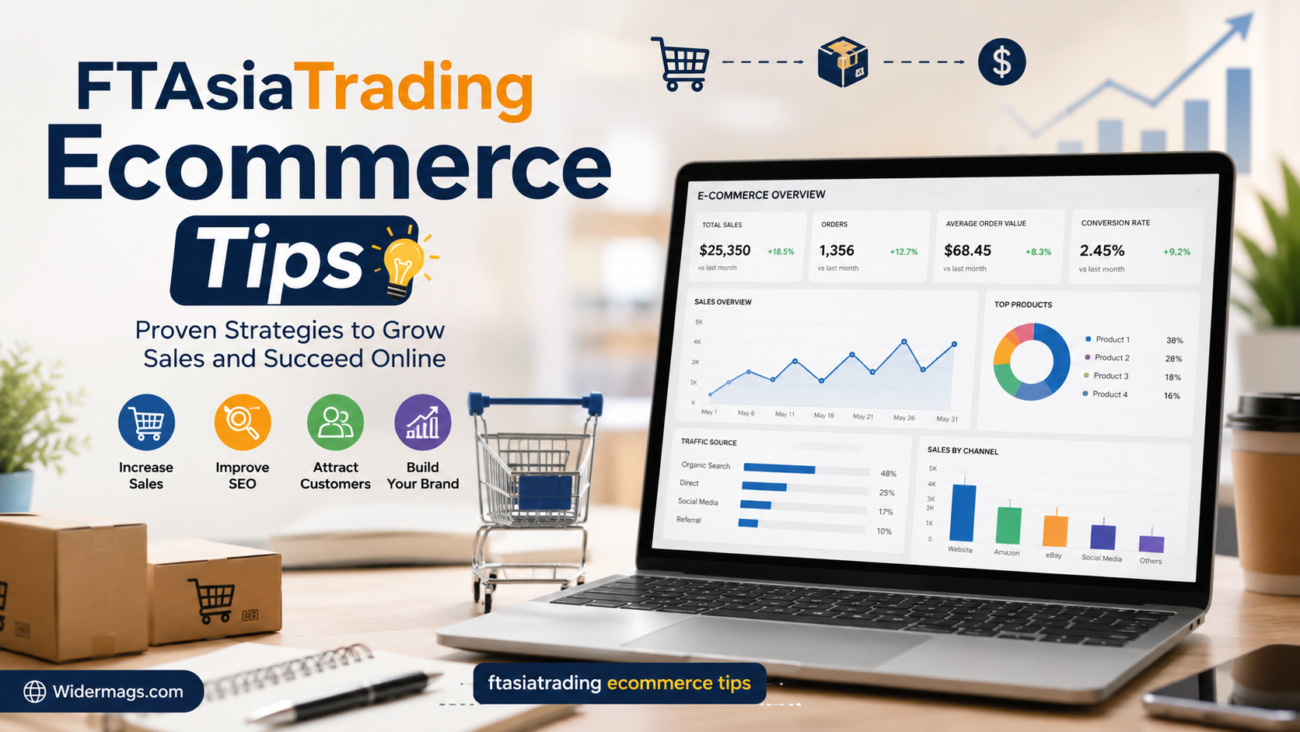
The ecommerce industry continues to evolve at an incredible pace, creating both opportunities and challenges for online sellers. Whether you are launching a new online store or managing an established ecommerce business, having the right strategies in place can significantly impact your growth and profitability. This is where FTAsiaTrading ecommerce tips become valuable. By focusing on customer experience, search engine optimization, digital marketing, product management, and data-driven decision-making, online businesses can strengthen their market position and achieve long-term success.
The modern ecommerce landscape is highly competitive. Consumers have more choices than ever before, and their expectations continue to rise. Businesses that fail to adapt often struggle to maintain customer engagement and sales growth. Fortunately, practical ecommerce strategies can help online stores improve visibility, attract qualified traffic, increase conversions, and build customer loyalty. This comprehensive guide explores the most effective FTAsiaTrading ecommerce tips that can help businesses grow sales and succeed online.
Understanding the Foundation of Ecommerce Success
Before implementing advanced marketing techniques, it is important to establish a strong foundation for your ecommerce business. Many online sellers focus heavily on advertising without ensuring that their website, products, and customer journey are optimized. A successful ecommerce store begins with a clear understanding of its target audience, product offerings, pricing strategy, and unique selling proposition.
Understanding customer needs allows businesses to create solutions that address specific problems. Researching competitors can also reveal opportunities to differentiate products and services. A strong brand identity helps customers remember your business and builds trust over time. The most successful ecommerce companies invest considerable effort in creating a seamless shopping experience that encourages visitors to become repeat customers. By focusing on fundamentals first, businesses can maximize the effectiveness of future marketing efforts.
Optimize Your Ecommerce Website for User Experience
One of the most important FTAsiaTrading ecommerce tips is prioritizing user experience. A website that is difficult to navigate or slow to load can quickly drive potential customers away. Modern consumers expect websites to be fast, responsive, and easy to use across all devices.
Website design should focus on simplicity and functionality. Navigation menus should be intuitive, product categories should be clearly organized, and search functionality should help visitors quickly find what they need. Product pages should include detailed descriptions, high-quality images, pricing information, and customer reviews.
Mobile optimization is equally critical. A significant percentage of ecommerce traffic now comes from smartphones and tablets. A mobile-friendly website improves user satisfaction and contributes to better search engine rankings. Businesses that prioritize website usability often experience lower bounce rates, longer browsing sessions, and higher conversion rates.
Leverage SEO to Increase Organic Traffic
Search engine optimization remains one of the most cost-effective methods for attracting qualified visitors to an ecommerce store. Effective SEO strategies help businesses rank higher in search engine results, increasing visibility among potential customers actively searching for relevant products.
Keyword research serves as the foundation of ecommerce SEO. Businesses should identify keywords with strong search intent and incorporate them naturally into product titles, descriptions, category pages, and blog content. The focus keyword FTAsiaTrading ecommerce tips can be strategically included throughout content while maintaining readability.
Technical SEO also plays a vital role. Fast page loading speeds, secure HTTPS connections, optimized images, and clean site architecture contribute to better search performance. Internal linking helps search engines understand website structure while guiding users to related products and content. Consistent SEO efforts can generate sustainable traffic and reduce dependence on paid advertising channels.
Create High-Quality Product Listings
Product listings are often the deciding factor in whether a customer completes a purchase. Detailed and informative product pages help shoppers understand product features, benefits, and value. High-quality listings also contribute to better search engine rankings and improved user engagement.
Effective product descriptions should focus on benefits rather than simply listing features. Customers want to know how a product can solve their problems or improve their lives. Professional product photography is equally important because online shoppers cannot physically inspect products before purchasing.
Including multiple images, zoom functionality, videos, and customer-generated content can significantly enhance product pages. Transparency regarding pricing, shipping costs, return policies, and product specifications builds trust and reduces uncertainty. Well-crafted product listings improve conversion rates and encourage customers to make confident purchasing decisions.
Use Content Marketing to Build Authority
Content marketing remains one of the most powerful FTAsiaTrading ecommerce tips for long-term growth. Valuable content attracts potential customers, improves search engine rankings, and positions a business as an industry authority. Ecommerce brands can create blogs, buying guides, tutorials, videos, infographics, and case studies to educate and engage audiences.
For example, an online electronics retailer might publish articles explaining how to choose the best laptop for different needs. A fashion store could create style guides and seasonal trend reports. Educational content helps customers make informed purchasing decisions while introducing them to relevant products.
Regularly publishing useful content also creates opportunities for backlinks, social sharing, and audience engagement. Over time, content marketing contributes to stronger brand recognition and a larger pool of loyal customers.
Harness the Power of Social Media Marketing
Social media platforms have become essential tools for ecommerce growth. Businesses can use platforms such as Facebook, Instagram, TikTok, Pinterest, and LinkedIn to connect with customers, showcase products, and drive traffic to their online stores.
Successful social media marketing requires consistency and authenticity. Brands should focus on creating engaging content that resonates with their audience rather than constantly promoting products. Behind-the-scenes content, user-generated content, tutorials, product demonstrations, and customer success stories often perform exceptionally well.
Influencer partnerships can also expand brand reach and credibility. Collaborating with influencers whose audiences align with your target market can generate awareness and drive sales. Social media advertising further enhances visibility by allowing businesses to target specific demographics, interests, and behaviors. When executed effectively, social media marketing can become a significant source of traffic and revenue.
Improve Conversion Rates Through Strategic Optimization
Driving traffic to an ecommerce website is only part of the equation. Businesses must also optimize their conversion rates to maximize the value of every visitor. Conversion rate optimization involves analyzing customer behavior and making improvements that encourage purchases.
Clear calls-to-action help guide users through the buying process. Simplified checkout procedures reduce friction and decrease cart abandonment rates. Offering guest checkout options can further improve user convenience.
Trust signals such as customer reviews, security badges, money-back guarantees, and transparent policies help reassure potential buyers. Businesses should also conduct A/B testing to evaluate different page designs, headlines, product images, and promotional offers. Small improvements in conversion rates can have a substantial impact on overall revenue and profitability.
Implement Effective Email Marketing Campaigns
Email marketing continues to deliver one of the highest returns on investment among digital marketing channels. It enables businesses to maintain direct communication with customers and nurture long-term relationships. A strong email strategy is one of the most practical FTAsiaTrading ecommerce tips for sustainable growth.
Businesses can use email campaigns to welcome new subscribers, promote special offers, announce product launches, and recover abandoned carts. Personalized emails tend to generate higher engagement rates because they address individual customer interests and behaviors.
Segmentation allows marketers to send relevant content to specific audience groups. For example, repeat customers may receive loyalty rewards while first-time buyers receive educational content and introductory discounts. Consistent email communication helps increase customer retention and encourages repeat purchases.
Utilize Data Analytics for Smarter Decisions
Modern ecommerce platforms provide access to extensive data that can help businesses make informed decisions. Analytics tools reveal valuable insights into customer behavior, traffic sources, conversion rates, and purchasing patterns.
Monitoring key performance indicators enables businesses to identify strengths and weaknesses within their operations. For example, high bounce rates may indicate website usability issues, while low conversion rates may suggest problems with product pages or checkout processes.
Customer data can also support personalization efforts. By understanding customer preferences and purchase histories, businesses can deliver more relevant product recommendations and marketing messages. Data-driven decision-making reduces guesswork and improves overall business performance.
Focus on Customer Retention and Loyalty
Acquiring new customers is important, but retaining existing customers is often more cost-effective and profitable. Loyal customers tend to spend more, purchase more frequently, and recommend brands to others. Therefore, customer retention should be a central component of every ecommerce strategy.
Excellent customer service plays a significant role in building loyalty. Prompt responses to inquiries, efficient issue resolution, and proactive communication create positive customer experiences. Loyalty programs can further encourage repeat purchases by rewarding customers for their continued support.
Personalized offers, exclusive discounts, and special promotions help customers feel valued. Gathering feedback through surveys and reviews also demonstrates a commitment to continuous improvement. Businesses that prioritize customer satisfaction often benefit from stronger brand loyalty and sustainable growth.
Future Trends Shaping Ecommerce Success
The ecommerce industry continues to evolve as technology advances and consumer behaviors change. Businesses that stay informed about emerging trends are better positioned to maintain a competitive advantage. Artificial intelligence, personalization, voice search, augmented reality, and automation are transforming how customers interact with online stores.
AI-powered chatbots provide instant customer support, while recommendation engines deliver personalized shopping experiences. Augmented reality allows customers to visualize products before purchasing, reducing uncertainty and increasing confidence. Automation streamlines inventory management, order processing, and marketing activities.
Sustainability is another growing priority among consumers. Many shoppers prefer brands that demonstrate environmental responsibility and ethical business practices. Ecommerce businesses that embrace innovation and adapt to changing market conditions are more likely to achieve long-term success.
Conclusion
Implementing effective FTAsiaTrading ecommerce tips can significantly improve an online store’s performance and profitability. Success in ecommerce requires more than simply listing products online. Businesses must focus on creating exceptional user experiences, optimizing for search engines, leveraging content marketing, engaging audiences through social media, and continuously improving conversion rates.
Additionally, email marketing, data analytics, customer retention strategies, and awareness of emerging trends contribute to long-term growth. The most successful ecommerce businesses are those that consistently evaluate performance, adapt to market changes, and prioritize customer satisfaction. By applying the strategies outlined in this guide, online sellers can strengthen their competitive position, increase sales, and achieve sustainable success in the dynamic world of ecommerce.
