
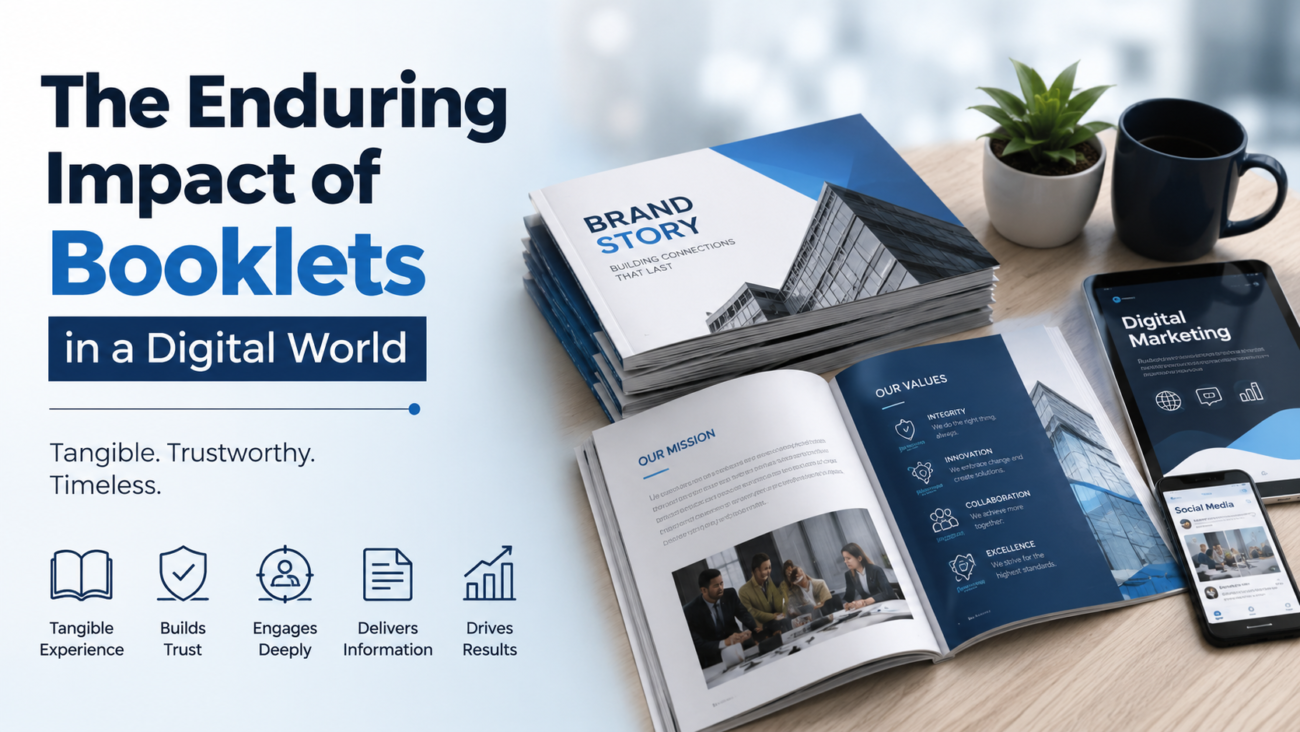
In a landscape overflowing with digital content, the timeless appeal of printed materials, especially booklets, remains unmatched. Booklets deliver a tactile experience that cannot be replicated on screens, making them an effective channel for connecting with audiences on a deeper level.
Unlike emails or online ads, the physical nature of a well-crafted booklet forges a personal connection between the reader and your message. This interaction leads to increased engagement, better recall, and a feeling of being valued. Booklets continue to thrive because they cater to the human need for tangible, curated experiences.
When you place a booklet in someone’s hands, you do more than just share information; you invite them into a thoughtfully designed journey. According to a recent Axios analysis, the resurgence of print materials in marketing strategies is driven by their unique ability to cut through digital noise. Whether used as direct mail or handed out at an event, physical booklets build stronger emotional connections and foster trust.
The psychological benefit of holding a booklet translates to real-world impact. Readers are more likely to remember and act on messages received in print, especially when the booklet is personalized or targeted to their interests. This personal approach stands out amid generic digital campaigns, capturing attention and driving meaningful responses.
The Personal Touch of Booklets
Booklets offer immediate value through physical presence. A reader is more likely to connect with a beautiful, tangible piece than with fleeting digital content. Print appeals to the senses, making reading an engaging experience. This sensory engagement enhances emotional resonance—a powerful asset for educators, brands, and organizations that want to leave a lasting impression.
Customization further increases the booklet’s appeal. For example, a nonprofit distributing individualized donor reports in booklet form can inspire greater loyalty and higher donation rates than standardized mass emails. The physical format signals investment in the relationship and respect for the recipient’s time and attention.
Moreover, the permanence of print ensures that booklets can linger in offices, homes, or public spaces, serving as reminders of your message longer than digital content that can be deleted or ignored with a click. Thoughtful finishing touches, such as unique paper stocks, embossing, or spot UV coating, can add sophistication and perceived value to your booklets, strengthening the positive impression left on recipients. As part of a varied marketing mix, printed booklets can complement social media, email, and digital campaigns—each reinforcing and enriching the other.
Booklets as Storytelling Tools
The structure of a booklet allows for clear, guided storytelling. Organizations can present information in a sequence that builds understanding and involvement. Each turn of the page offers an opportunity to highlight brand values, share product stories, or present case studies in a visually immersive way.
Storytelling with booklets goes beyond facts and figures. By focusing on narrative flow and emotional cues, brands can humanize their message and establish relatability. This approach deepens engagement, transforming readers from passive recipients into active participants in the story.
Incorporating Interactive Elements
Today’s booklets can seamlessly connect the physical and digital worlds. QR codes are a popular addition, allowing readers to access landing pages, exclusive content, or real-time offers with a simple scan. Some organizations are experimenting with augmented reality triggers within booklets, providing immersive digital experiences through smartphones or tablets.
Even in digital booklet versions, features like embedded video or audio can enhance storytelling and increase retention. These interactive touches not only sustain reader interest longer but also provide measurable engagement data for organizations tracking ROI and campaign effectiveness.
Design Best Practices
An impactful booklet combines compelling content with thoughtful design. High-resolution visuals, consistent branding, and clear typefaces contribute to credibility and readability. Infographics can distill complex information into digestible visuals, and a logical hierarchy of headings and bullet points supports easy navigation for the reader.
The best booklets avoid clutter. Each design element should serve a purpose and help the message shine. Accessibility must also be prioritized, with strong color contrasts, readable text sizes, and alternative text for key visuals to ensure inclusivity for all audiences.
Effective Distribution Strategies
The impact of any booklet campaign depends on its ability to reach the right audience. Booklets excel in direct mail, trade shows, educational seminars, and retail environments. Combining print with a digital strategy, such as downloadable PDFs or email-driven distribution, increases reach while catering to different preferences.
It can be valuable to make booklets available both physically and digitally, meeting the needs of those who prefer tangible materials as well as those who rely on digital access. Coordinating digital and print distribution ensures your content is accessible, searchable, and shareable.
Measuring the Impact of Booklets
Understanding the effectiveness of a booklet involves more than counting copies distributed. Strategic elements, such as unique QR codes or custom URLs, help track engagement rates and reader behavior. Feedback forms, both paper-based and digital, provide direct insight into audience responses and satisfaction.
Analyzing data from multiple channels helps organizations refine their approach, improve future campaigns, and maximize return on investment. Insights gained from measuring booklet engagement can be used to personalize subsequent outreach and build stronger relationships over time.
Conclusion
Booklets remain an irreplaceable component of effective communication in the digital era. Their sensory appeal, ability to tell compelling stories, and integration with interactive elements set them apart from digital-only content. By prioritizing thoughtful design, strategic distribution, and measurable engagement, organizations can leverage booklets to foster lasting connections with audiences and drive tangible results.
